DIARIO DI UN CACCIATORE DI SPAZI/ DIARIO DE UN CAZADOR DE ESPACIOS
DIARY OF A SPACE HUNTER
2003 – Libro de referencia internacional / Autor: Alberto Morell / Editor: Clean edizioni, Napoli / ISBN 88-8497-070-9
2003 – International reference book / Author: Alberto Morell / Publisher: Clean edizioni, Napoli / ISBN 88-8497-070-9
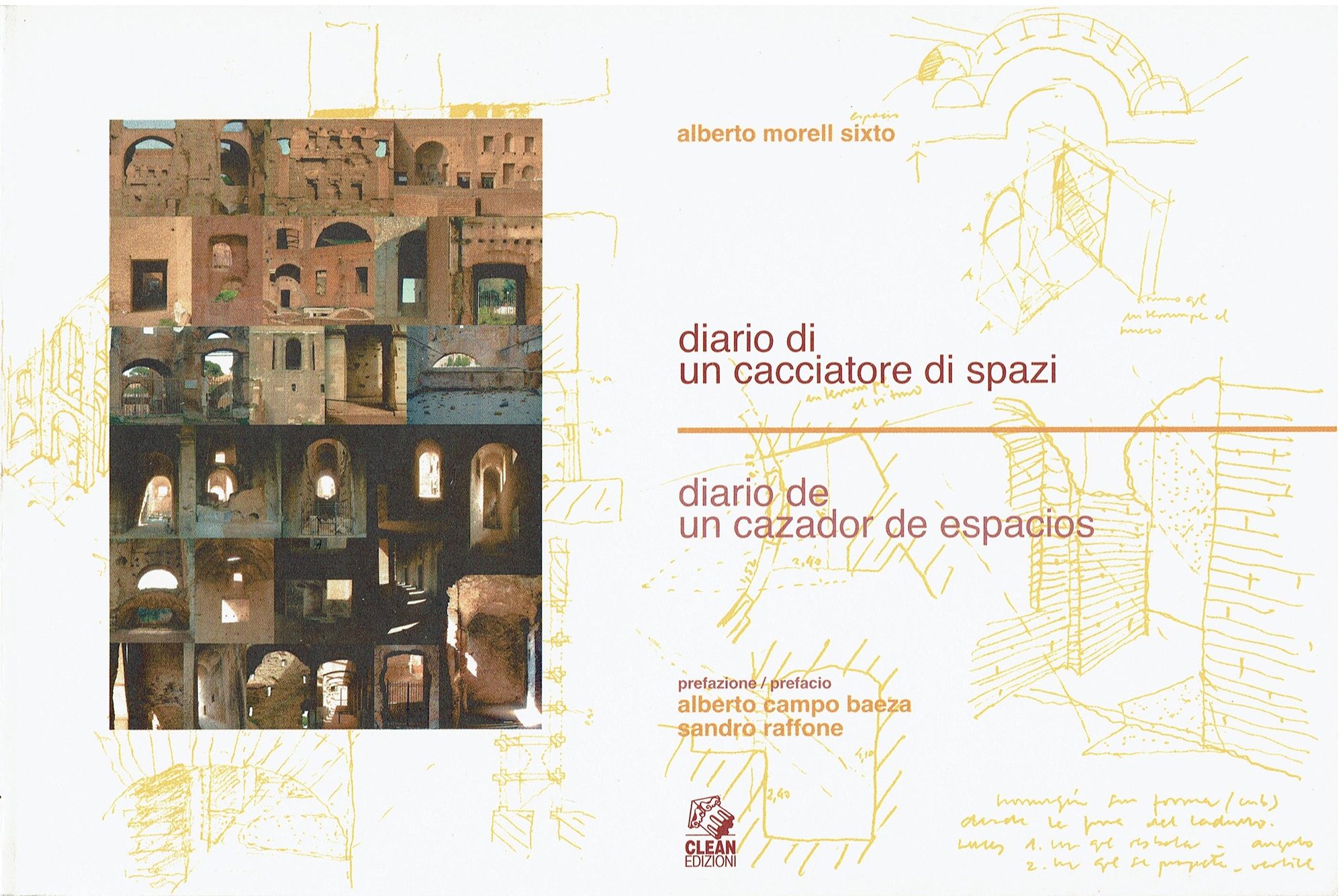
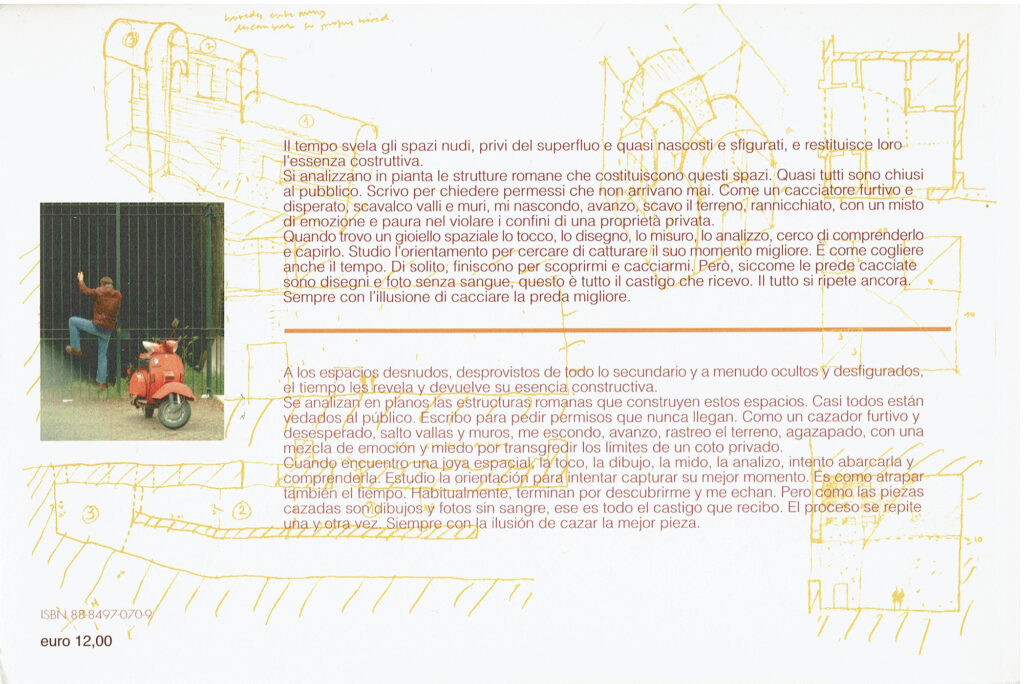
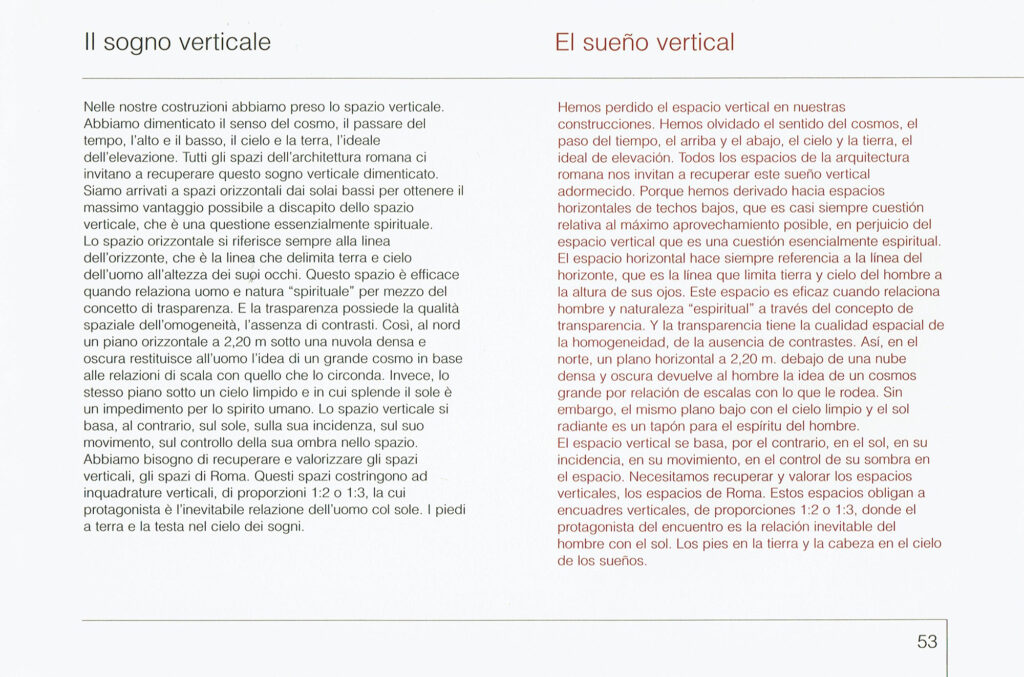
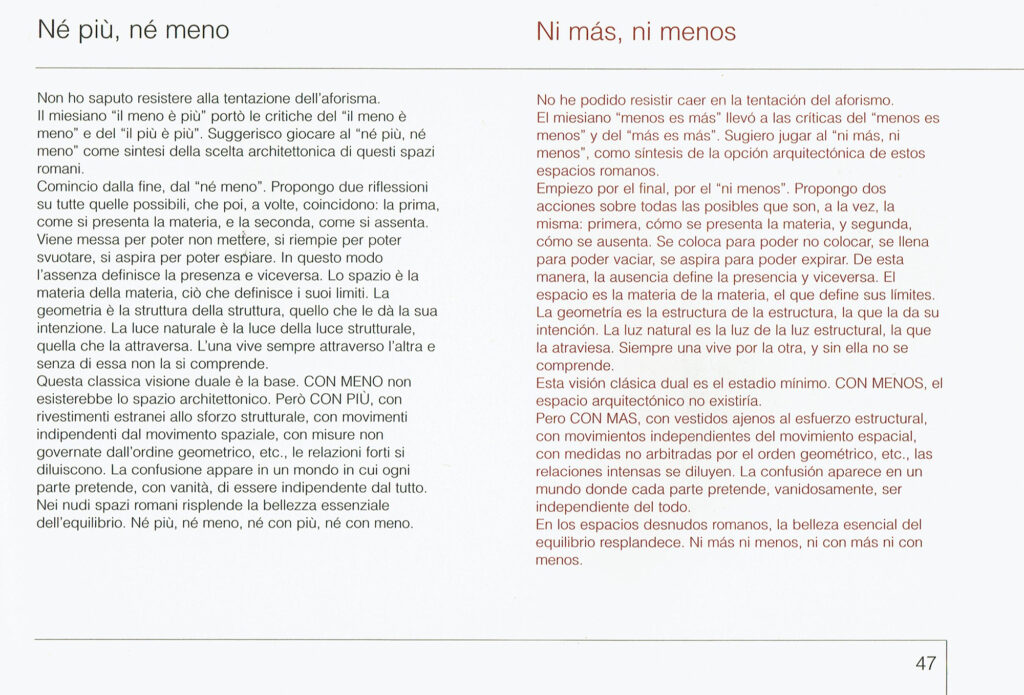
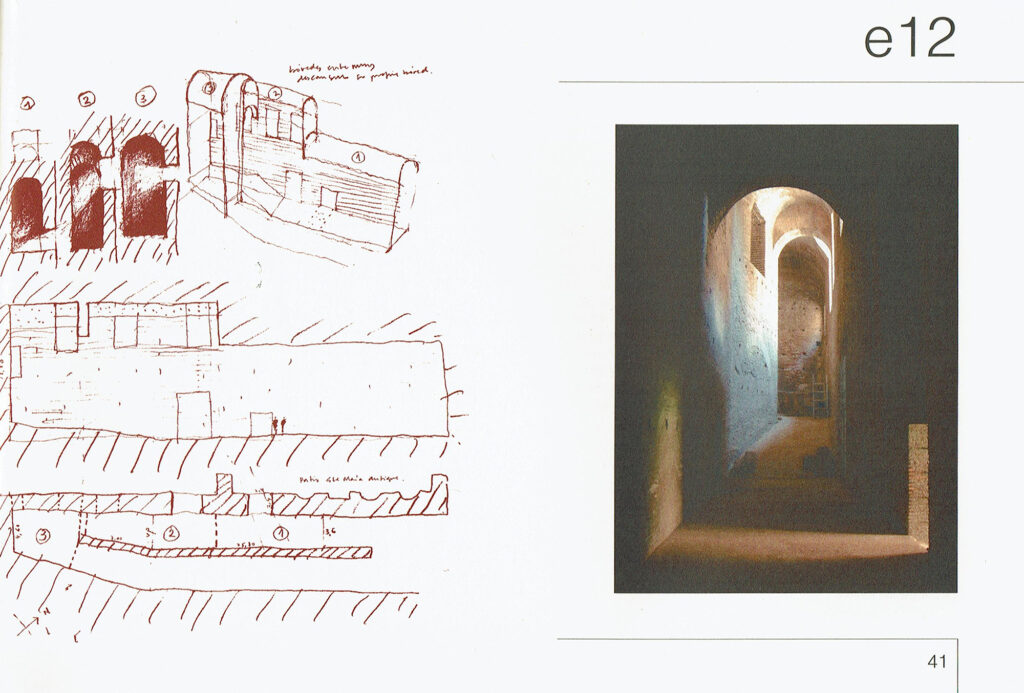
Este libro es el resultado de la investigación realizada como becario en la Academia de España en Roma, con motivo de la obtención del Premio de Roma en el año 2001. Su publicación tiene un doble objetivo. Por un lado, identificar, documentar, dibujar y fotografiar espacios de la Roma antigua olvidados o no publicados. Por otro, animar a los estudiantes de arquitectura a estudiar y analizar espacios arquitectónicos a través de su visita en directo. Para ello, se han seleccionado doce espacios entre las ruinas de los foros de Roma, que presenten una estructura completa o semicompleta, de manera que puedan ser susceptibles del estudio de su geometría, construcción y luz. De estos espacios, se intenta descubrir sus ideas generadoras, de manera que pudieran ser utilizadas en proyectos contemporáneos. De la misma manera que Le Corbusier trasladara las ideas espaciales de la Villa Adriana a su Iglesia de Ronchamp. El trabajo de investigación se completa con doce ensayos sobre algunos de los invariantes que se han detectado en la arquitectura romana, como “el sueño vertical”, “los es-tratos”, “lo controlado y lo fortuito” o “Roma desnuda”.
This book is the result of the research carried out as a scholarship holder at the Spanish Academy in Rome, on the occasion of obtaining the Rome Prize in 2001. Its publication has a double objective. On the one hand, to identify, document, draw and photograph forgotten or unpublished spaces of ancient Rome. On the other hand, to encourage architecture students to study and analyze architectural spaces by visiting them live. For this purpose, twelve spaces have been selected among the ruins of the forums of Rome, which present a complete or semi-complete structure, so that they can be susceptible to the study of their geometry, construction and light. From these spaces, the aim is to discover their generative ideas, so that they can be used in contemporary projects. In the same way that Le Corbusier transferred the spatial ideas of the Villa Adriana to his church in Ronchamp. The research work is completed with twelve essays on some of the invariants that have been detected in Roman architecture, such as «the vertical dream», «the es-traits», «the controlled and the fortuitous» or «naked Rome».