MUSEO DE MERCEDES BENZ EN STUTTGART, ALEMANIA
MERCEDES BENZ MUSEUM IN STUTTGART, GERMANY
2002 – Concurso internacional / Arquitectos: Alberto Campo Baeza + Alberto Morell / Colaboradores: Colaboradores: Ignacio Aguirre + Felipe Samarán + Emilio Delgado + Javier Calvo + Antonio Álvarez + María c.p. Gutierrez + Alejandro Cervilla + Ingrid Campo + Alfredo Muñoz + Luis Ürculo + Miguel Ciria + Andrés Toledo
2002 – International competition / Architects: Alberto Campo Baeza + Alberto Morell / Collaborators: Ignacio Aguirre + Felipe Samarán + Emilio Delgado + Javier Calvo + Antonio Álvarez + María c.p. Gutierrez + Alejandro Cervilla + Ingrid Campo + Alfredo Muñoz + Luis Ürculo + Miguel Ciria + Andrés Toledo
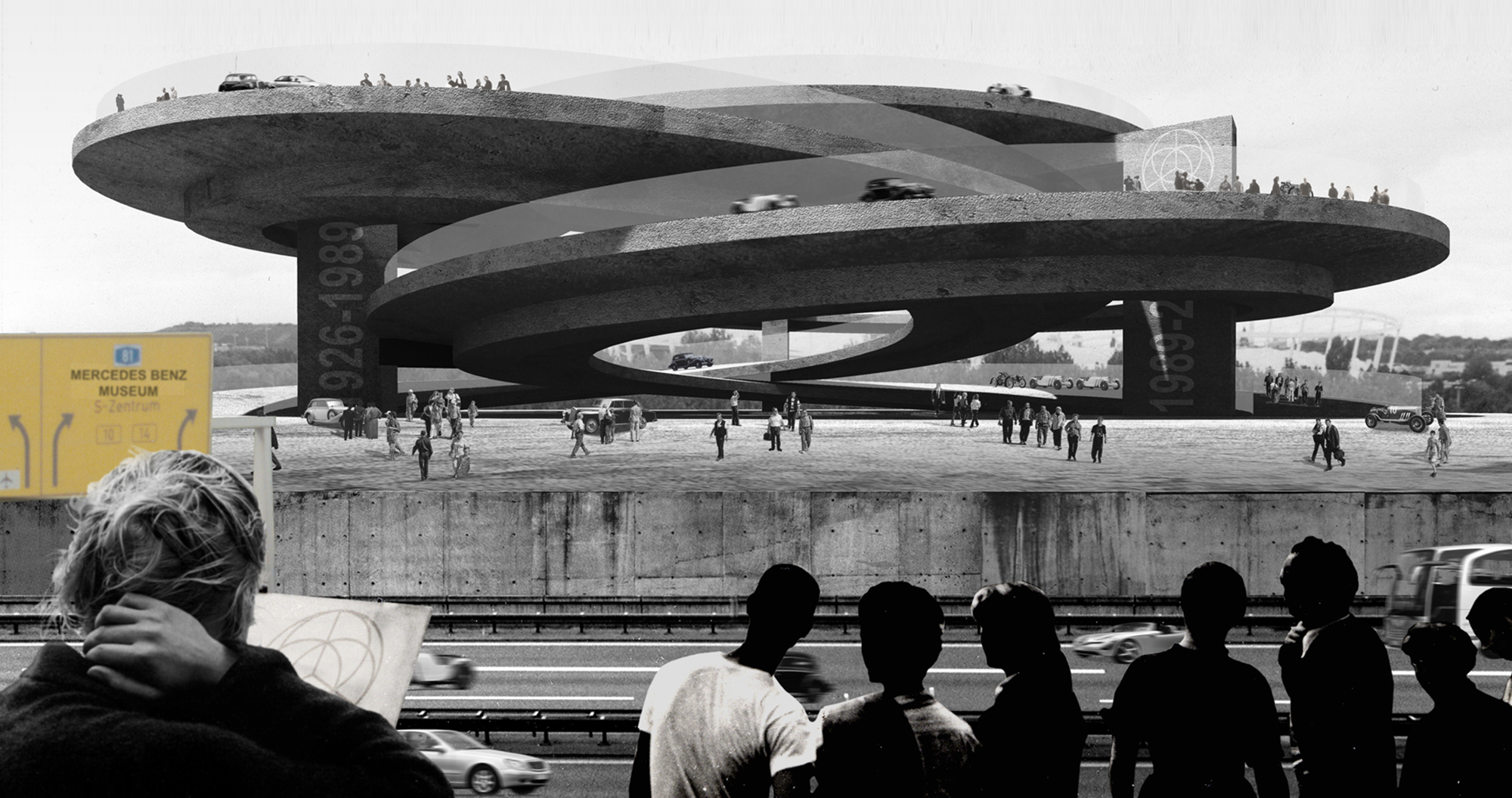
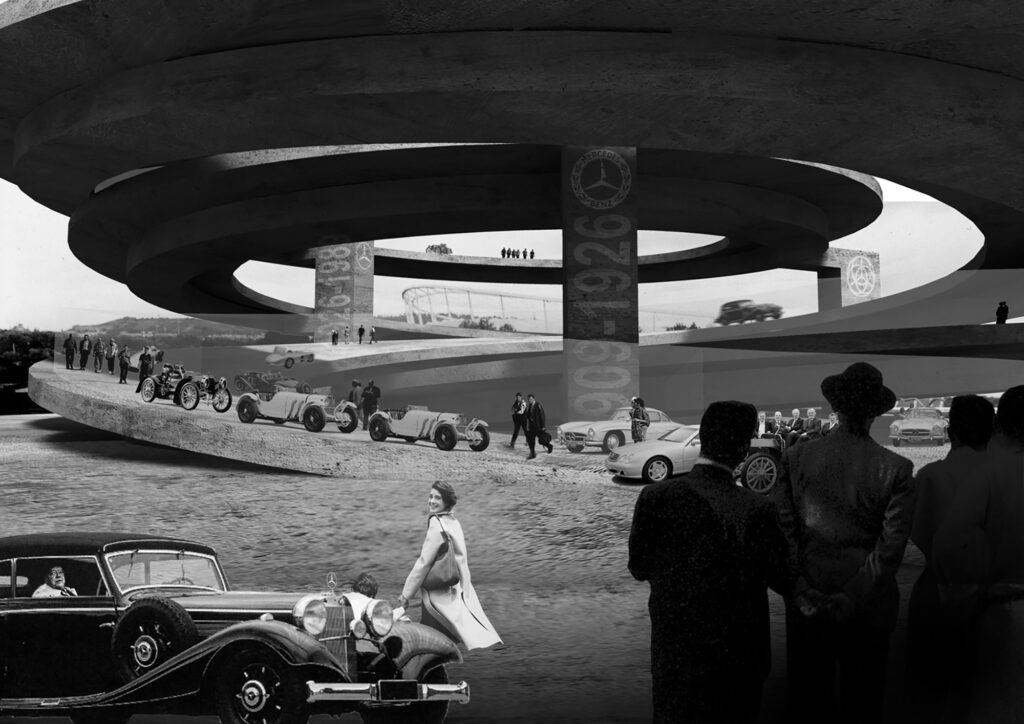
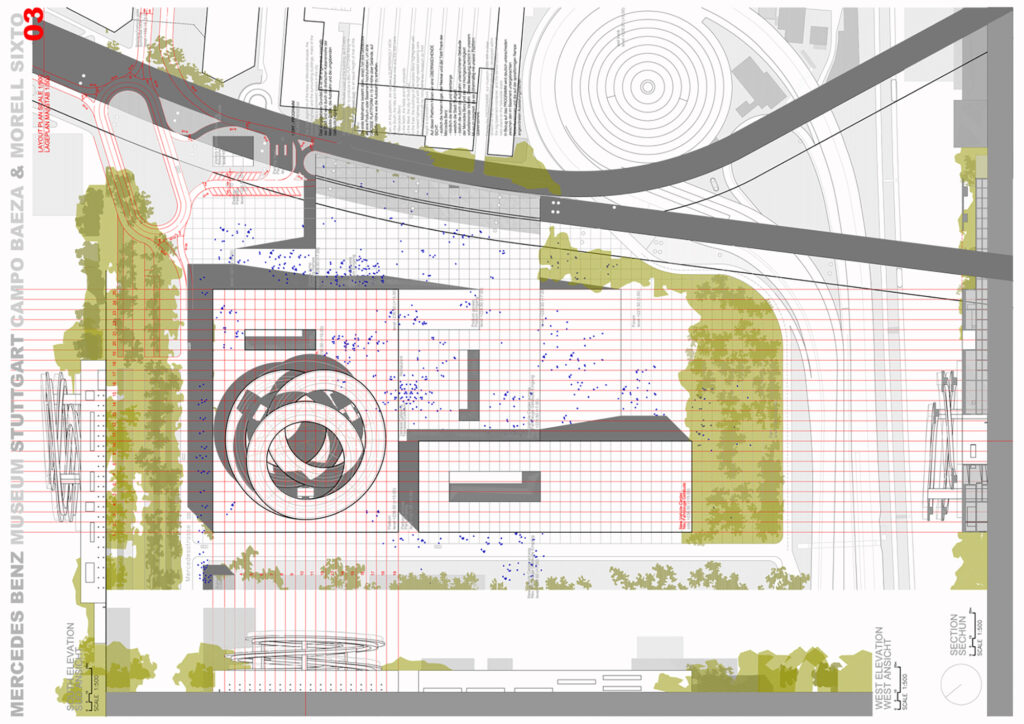
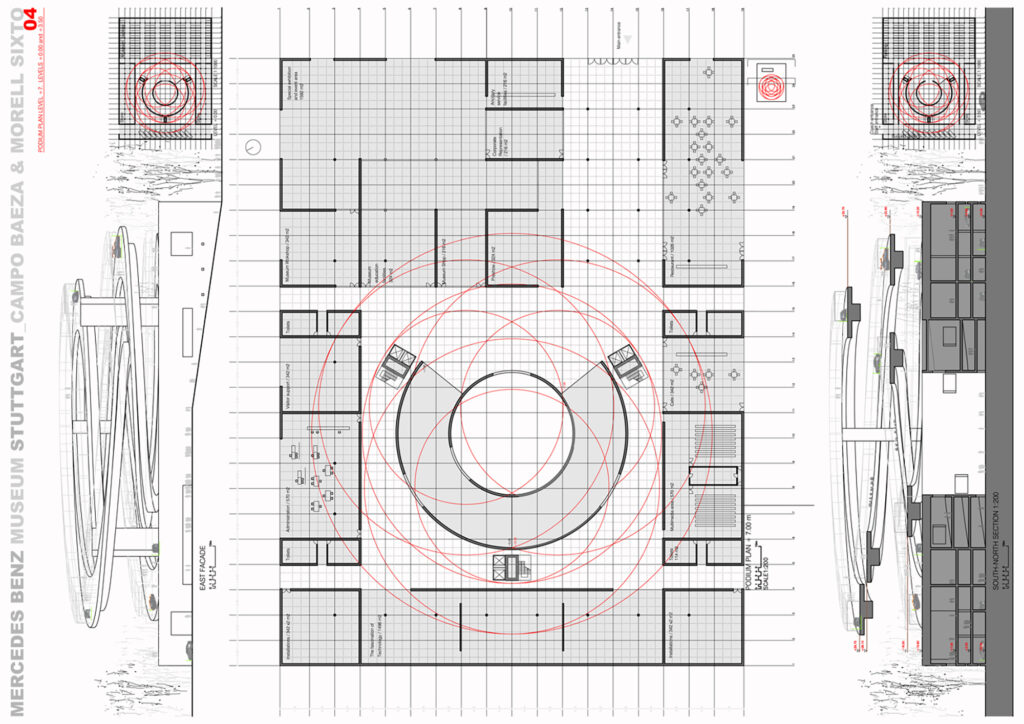
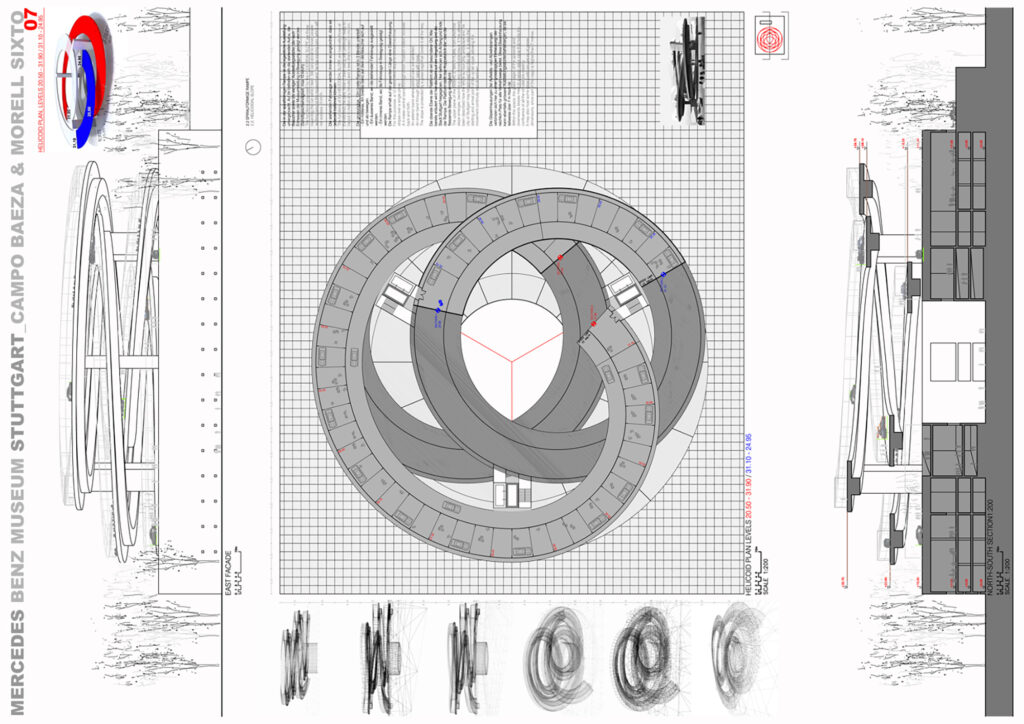
HISTORIA EN MOVIMIENTO / Un museo de automóviles es algo muy específico y distinto. Lo que allí se exhibe es algo en movimiento o dispuesto a moverse; estar en movimiento es su esencia. Por lo tanto, debemos comenzar a sentir el disfrute y el asombro de presenciar físicamente este movimiento. Además, este museo de Mercedes-Benz cuenta con la posibilidad única de explicar la evolución histórica del vehículo automotor con aquellos coches de su propia marca. Entonces, imaginemos para nuestro museo algo como un trozo de carretera. Es más, como el objetivo es el movimiento de ida y vuelta de los coches, entonces el movimiento debe ser continuo. La formalización geométrica ha sido una estructura helicoidal, que crece en tres cilindros directores de 70 metros de diámetro, tangentes a un cilindro envolvente de 95 metros de diámetro. Una estructura inclinada que crece hacia arriba y hacia abajo en un movimiento continuo y con suaves gradientes, cediendo al entrecruzamiento de los distintos vanos.
HISTORY IN MOVEMENT / A museum for cars is something very specific and distinct. What is there exhibited is something in movement or ready to move; being in movement is its essence. Therefore, we must begin to feel the enjoyment and amazement of physically witnessing this movement. Besides, this museum for Mercedes-Benz counts in with the unique possibility of explaining the historical evolution of the automotive vehicle with those cars of its own brand. Then, let us imagine for our museum something such as a piece of highway. What is more, as the aim is the back and forth movement of the cars, then the movement must be continuous. The geometrical formalization has been an helicoidal structure, which grows up into three directrix cylinders of 70 meters of diameter, tangent to a wrapping cylinder of 95 meters of diameter. An sloping structure that grows up an down in a continuous movement and with soft gradients, yielding to the cross crossing of the different spans.